Initial release: November 2, 2026 · First research review and PR-26 source correction: November 4, 2026 · Original source dates remain specific to each finding.
These notes summarize public records. Reported resources, project commitments, expenditures, and available housing units are different measures. They must not be treated as interchangeable.
This is the dated research journal. Start with current topic status, then read the original articles and correction records below.
Dated updates and earlier wording remain available with their corrections.
What We Know / Still Unanswered
Tucson’s final annual report status was checked November 9, 2026. County allocation and PRICE records were reviewed November 8. Other topics retain their original review dates. This is not a live funding, award or vacancy update.
What’s Still Needed to Verify Tucson’s 2025 Housing Results?
Sources checked .
What the record shows. Tucson announced a public-comment draft of its Program Year 2025 Consolidated Annual Performance and Evaluation Report (CAPER), covering July 1, 2025 through June 30, 2026. The City’s reports index still lists the PY2024 CAPER as its latest entry.
What’s still open. We have yet to verify the final PY2025 report or its submission to the U.S. Department of Housing and Urban Development (HUD). The records needed are the final report, its detailed spending and outcome tables, and dated records of submission and HUD receipt.
What we know: $8.7 million in FY2027 County allocations and $2,986,331 in County-approved PRICE scopes. A separate additional $1 million request was tabled indefinitely.
Still unanswered: Executed agreements, actual County spending and matched household outcomes. Federal reporting of $78,172.27 through August 2026 concerns the City’s entire PRICE award, not County spending.
What we know: The draft’s 378-unit list includes 96 existing Casa del Pueblo apartments being rehabilitated. Current Lariat and Shasta permit records show continuing construction. The 378 figure is not a verified count of completed new homes; neither a revised completed-new-home total nor its relationship to 483 is verified.
Still unanswered: Project-by-project stages, completion dates, total versus HOME-assisted units and nonduplicative aggregate occupancy.
What we know: Resource and ending-balance arithmetic reproduces. The October 6 action report directly confirms adoption of the $1.5 million category transfer, with no increase in total funding. Formula CDBG and CDBG-CV use separate reports; the earlier $944,972.60 mixed-program comparison is withdrawn.
Still unanswered: HUD submission, implementation and spending for the transfer remain open. Which transactions explain the separate $1,284,589.71 formula-CDBG narrative difference? It is not a finding of missing funds or available assistance.
What we know: HUD allocations and the later City plan agree on $9,613,482.81 across four programs; HOME covers the Tucson/Pima consortium. Forecast program income is separate.
Still unanswered: Receipts, commitments, spending and matched outcomes remain to be verified. The final PY2025 CAPER and HUD receipt status have not been confirmed in this research; that does not establish non-submission.
What we know: Records describe 82 existing apartments and a separate County award. Posted Resolution 24206 states adoption of authorization for up to $10 million in bonds. The November 4 legal action report now confirms the separate 6–0 Council vote on Item J. The volume-cap allocation and bond authorization concern the same financing and must not be added together. Federal records show an environmental milestone and a submitted financing plan.
Still unanswered: Closing, proceeds, signed assistance contracts, current vacancies, and conflicting bedroom and cost estimates require verification.
What we know: The August 18 packet supports the up-to-120 PBV plan; the local action was adopted as amended. The October 30 memo describes 181 planned across two phases. Separately, the City reports 41 summer placements in existing El Portal apartments with Housing First assistance. These are not outcomes of the planned voucher expansion.
Still unanswered: Final HUD approval, effective policy, signed contracts and aggregate households receiving the new PBV assistance remain unverified. Community Preference recommendations are targeted for 2027; the reviewed presentation does not establish a current preference.
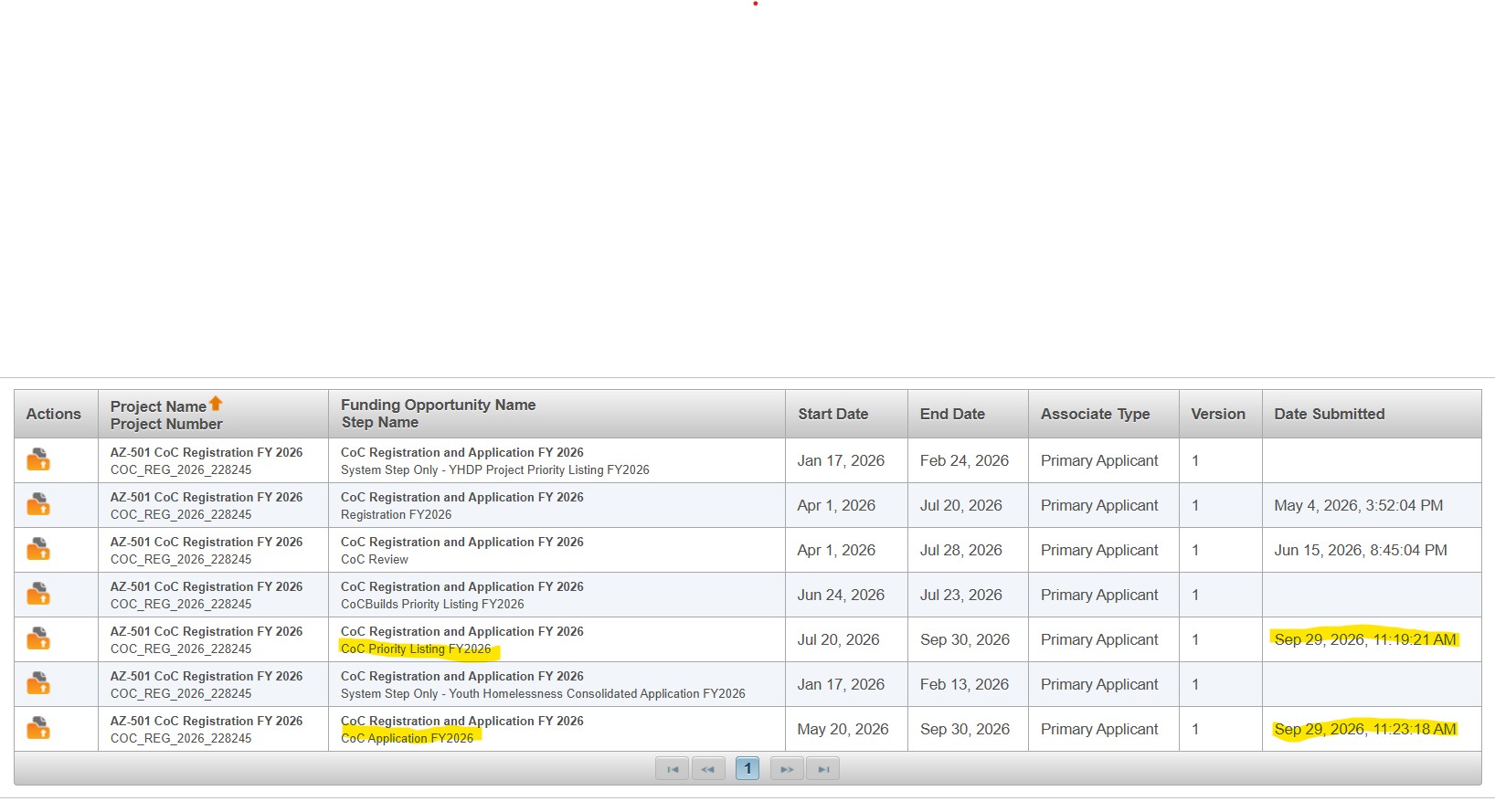
What we know: The priority listing requests $22,827,346 and names Housing First PSH for partial reallocation. Submission is documented. Page 8 identifies SAAF AVP-RRH as the roughly 50% underspending-reallocation case, followed by reallocation of the balance for limited renewal space.
Still unanswered: Final HUD awards, implementation and the identity of the separate payment-system-lockout case remain unverified. The SAAF AVP-RRH reduction is distinct from Housing First.
What we know: TPCH reports 21 of 36 eligible Housing First leavers and 99 of 177 MDOT leavers exiting to permanent housing. Return-to-homelessness measures use a different cohort and period.
Still unanswered: Definitions, exclusions and matched reporting periods must remain attached to comparisons. These measures do not establish underspending or cost per outcome. Seek aggregate counts and appropriately redacted records, protecting small groups from identification.
Add the Atom update feed to a feed reader. It links to dated research updates and corrections, with no email sign-up. The feed includes selected updates with recorded publication times. Existing entry IDs and publication history are retained.
Feed dates reflect the entries’ recorded publication and revision times, not the date this feed was added. This is not an email alert service.
Craycroft and Lee Street: Council Vote Confirmed
Published: . Research reviewed: . Publication time records the successful website deployment; source dates are unchanged.
The November 4, 2026 legal action report records a 6–0 vote adopting Resolution 24206 for Craycroft Towers and Lee Street Duplexes. Consent Agenda Item J was considered separately; Cunningham was absent/excused. This confirms the vote on the previously reported authorization for up to $10 million in bonds.
The vote does not establish bond closing, proceeds received, spending or completed housing. Signed assistance contracts, current vacancies and the conflicting bedroom and cost estimates remain unverified. The volume-cap allocation and bond authorization concern the same financing and must not be added together.
Published: . Research updated: . Source dates and financial reporting periods are identified below.
Pima County approved $8.7 million for housing and stability programs. A separate $1 million request was tabled indefinitely. The County also approved $2.99 million in PRICE agreement scopes for home repairs and eviction assistance. These approvals and targets do not establish actual County spending or households served.
County Housing Allocations
On September 8, 2026, the Board approved $5 million for gap funding and $3.7 million for housing stability, totaling $8.7 million for FY2027. The separate additional $1 million request was tabled indefinitely. These are allocation decisions, not evidence of payments or completed assistance. The posted meeting summary expressly is not approved minutes. Meeting summary, PDF p. 6 · Official allocation action
County PRICE Agreement Scopes
The two County-approved PRICE agreements total $2,986,331: $2,009,932 for home repairs and $976,399 for eviction-prevention and legal services. Their stated term is July 1, 2026–June 30, 2029. These are components of existing PRICE grant funding, not additional federal revenue to add to the full award. Repair agreement · Eviction-prevention agreement · Repair approval · Eviction-prevention approval
The records identify planned work and targets. They do not establish completed repairs, actual payments, legal outcomes or households already assisted. The posted execution pages contain blank mayor, Board chair and clerk signature lines; attorney review is present. Fully executed counterparts and later amendments remain unverified. Blank lines in a posted packet do not prove that no agreement was later executed.
Federal Reporting Covers the City Award
Separately, USAspending reports $78,172.27 in cumulative federal outlays for the City of Tucson’s $11,519,567.21 PRICE award, B-23-PR-04-0001. The latest returned reporting period is August 2026, before the September County approvals. This is not a measure of County spending. Monthly cumulative outlay rows must not be added together. The database’s later update stamp is not the expenditure cutoff. Federal award and reporting-period record
Later expenditures and actual household outcomes remain unverified. The difference between the award and reported outlays is not a verified available balance, and these records alone do not establish improper withholding or misuse.
More Records Clarify Payments, Project Progress and Housing Outcomes
Published: . Original record dates are identified below.
Additional public records provide more precise checkpoints for Tucson and Pima County housing programs. They strengthen the evidence while keeping accounting, occupancy and outcome questions open.
Voucher Payments and Carryover
The October 20 PHA report records $49,539,339 in Tucson and $9,161,950 in Pima County payments to property owners or managers for FY2026 (July 1, 2025–June 30, 2026), totaling $58,701,289. It reports $614,215 plus $306,275, totaling $920,490, as unaudited unspent assistance or next-year reserves, while its narrative calls the amount an operating surplus. Those labels still need reconciliation. October 20 report, pp. 1–2
The FY2025 Single Audit separately reports $62,789,037 in Housing Choice Voucher federal expenditures for July 1, 2024–June 30, 2025. Its accrual or modified-accrual measure is not FY2026 cash receipts. The near-match to the draft’s approximately $62.8 million narrative is a source-year question, not proof of an error. FY2025 Single Audit
Q-010 remains open: match FY2026 receipts, assistance payments, administration and restricted-reserve roll-forwards, and clarify the carryover labels. These comparisons do not establish available assistance or missing money.
Tucson House Temporary Occupancy
City permit TC-CFO-1026-00207 is listed as Issued for temporary occupancy associated with Tucson House’s 15th-floor Level 4 renovation. The register lists a November 15, 2026 expiration. The October 20 PHA report says the renovation was 30% complete, the 15th floor was finished and residents were moving back. Temporary-occupancy record · Related renovation permit · October 20 report, p. 3
The October 16 announcement’s 24 apartments and 25 households remain unreconciled. Neither the permit register nor the later narrative verifies a completed move count, new admissions or current vacancies. The original certificate and any conditions or renewal still need verification.
The separate 14th-floor application TC-CFO-1126-00224 remains Submitted – Online in the register checked November 7. November 6 inspection notes permit an application; they do not establish an issued certificate. Permit displays may lag: the 15th-floor register’s embedded data stamp is November 5. 14th-floor application
Amazon Motel and Amazon Flats
The County’s PO2500016491 packet uses the name “Amazon Flats” but describes $749,625 for conversion of a 30-room motel into 30 studios. That physical scope is the Amazon Motel conversion, separate from the 59-apartment Flats construction project. The April 8, 2026 EPHD legal action report records a 5–0 ratification of Amazon Flats’ financial closing. County contract packet · EPHD action report, p. 1
The action report does not supply the closing package or precise closing date, signed assistance contracts or actual Flats occupancy. The published County packet has blank signature and covenant lines; executed documents, completion reporting and certificates of occupancy remain record targets. The motel award must not be added to the Flats construction budget.
County One Stop Rapid-Rehousing Outcomes
The TPCH FY2026 scorecard reports 17 of 24 County One Stop rapid-rehousing leavers exiting to permanent housing (70.8%) for July 1, 2025–June 1, 2026, with no excluded leavers. A separate earlier group had 13 of 24 people return to homelessness within 12 months (54.2%); that cohort exited to permanent housing during June 1, 2024–June 1, 2025. TPCH scorecard, Data Back Up row 18
These are people in one project and two different cohorts, not a Countywide success rate or one group’s retention result. Matched reporting periods, inclusion rules and aggregate follow-up outcomes are needed before comparing costs or broader program performance.
HOME Match and ESG Targets
HUD’s HOME match workbook, FY2024 sheet row 24, lists a 50% fiscal-distress reduction for the Tucson Consortium, supporting a 12.5% required match rate. This does not validate accumulated match-credit eligibility or make credits available cash. HUD HOME match workbook
The original PY2024 Annual Action Plan describes the rapid-rehousing target as 30 individuals in its project narrative but 30 households in its goal table; another entry gives 10 households for combined rapid rehousing and prevention. The comparison with 18 reported actual households therefore needs a clarified target definition. Original action plan
The CAPER’s PR-91 shows the entire $48,734 rapid-rehousing budget drawn by September 23, 2025. That later grant-draw checkpoint does not explain the outcome count or establish cost per household. CAPER and PR-91
Definition clarification: Earlier current summaries called the ESG target simply “30 households.” The original plan uses both people and households. Q-004 now keeps that uncertainty explicit; the historical records remain available.
Questions for the November 10 and 12 Housing Discussions
Published: . Original record dates are identified below.
Pima County’s November 10 study-session packet includes draft FY2026/27 measures for households assisted, eviction representation and acceptance of encampment-related services. What baselines, nonduplicative counts and follow-up results will accompany those measures? Counting assistance does not establish how many households remain housed. The packet supports FY2027/28 budget planning; it does not establish newly approved housing funding. County packet, PDF pp. 4, 7 and 10
TPCH’s November 12 General Council agenda schedules a new Point-in-Time count strategy and an unsheltered-homelessness evaluation presentation. What changes are proposed, and how will future counts remain comparable with earlier years? The agenda establishes planned discussion, not adopted methodology or evaluation findings. TPCH agenda, p. 1
Status checked November 12, 2026: Pima County’s November 10 study-session record lists draft minutes; published minutes and action details for item 20984 are not available. TPCH’s November 12 agenda, page 1, schedules the presentations for its 12:30–2:30 p.m. meeting. These records do not establish adopted measures, methodology or evaluation findings. Outcomes remain unverified. This status check does not change the original publication date.
SRC-100 citation correction
HUD environmental review, HEROS 900000010528814. The record lists 7015.15 certification on August 11, 2026, and 7015.16 certification on September 1, 2026.
The November 9 source check recorded Solera Apartments in Renton, Washington at the former /8818 link. On November 10 that link returned a different unrelated review, for 452 NE Baker Drive in Grants Pass, Oregon. On November 10, HUD’s Tucson listing pointed to /8823. That download and the filename-based HUD link returned identical copies of HEROS 900000010528814. The proposed /8800 link returned Parade Park Homes Phase 1.
The environmental record establishes neither financing closing, disbursement, completed conversion, executed contracts, nor occupancy. A separate final signed 7015.16 instrument has yet to be independently inspected. HUD lists September 1, 2027 as the posting end. The filename segment 09012027 represents that date. The November 9, 2026 source check and November 10 link verification are separate from website publication.
New Records Clarify Housing Counts and Funding Decisions
Published: .
What’s Included in the Housing Count?
The City’s draft describes 378 units as newly constructed, but 96 at Casa del Pueblo are existing apartments being rehabilitated. Other projects in the list remain under construction. The figure is not a verified count of completed new homes. City permit
Which Grant Was Reduced?
The submitted priority list identifies SAAF’s AVP rapid-rehousing grant as the roughly 50% reduction: $792,695 was involuntarily reallocated for underspending, followed by reallocation of the balance because of limited renewal space. The separate payment-system-lockout case remains unidentified. Final HUD awards are unverified. Priority list
Where Does Craycroft Stand?
The City’s posted resolution states that Council adopted authorization for up to $10 million in bonds. Federal records show an environmental milestone and a submitted financing plan for the 82-unit preservation project. Closing, proceeds and signed assistance contracts remain unverified. City resolution · RAD data
What About El Portal?
The City reports that 41 households moved into existing El Portal apartments over the summer with Housing First assistance. That is separate from the planned voucher expansion, whose final HUD approval and signed contracts remain unverified. City report
What Happened to the CDBG Transfer?
The official action report confirms Council adopted the $1.5 million transfer between funding categories on October 6. It did not increase total funding. HUD submission, implementation and spending remain open questions. Council action report
Citation correction: the previous link opened a different project’s review. The correct HUD document records 7015.16 certification on September 1, 2026. Read the citation correction and source limits.
Pima County’s Housing Report: Counts and Averages Need Clarification
Published: . Source: November 5, 2026 County memo, pages 2–3.
What Did the County Report?
Pima County reported $2.49 million spent and 925 households served across six housing assistance strategies in the first quarter of FY27. The figures are subject to reconciliation; the report does not say whether households appear in more than one category.
What Doesn’t Add Up?
Rapid-Rehousing: The table lists 95 households, but the narrative totals 98.
Rapid-Rehousing Average: The reported costs divided by 95 equal $3,671.42, not the printed $3,290.42.
Home-Repair Average: The reported costs divided by 91 equal $2,279.52, not the printed $2,280.52.
What Funding Is Involved?
The $207,436 home-repair line is listed under County CDBG agencies. CDBG is a federal HUD program, but the memo doesn’t identify the specific award. It separately lists $111,045 as the County-funded portion of Affordable Housing Fund repair and weatherization work.
What’s Next?
A reconciled table and an explanation of the counts and calculations would clarify the results. The discrepancies alone do not establish misuse of funds.
Corrected source mappings for the CDBG approval recap and Craycroft/Lee Street finding, clarified the findings summary and completed reconciliation milestone, and attributed El Portal’s 120-unit limit to the October 30 memo. Figures and original source dates are unchanged.
F-003’s public data points to SRC-064 for Craycroft/Lee Street; unrelated Amazon Flats source SRC-065 remains available for the findings and questions it supports.
The 12 finding entries include 9 dated observations, 2 open comparisons and 1 resolved comparison (F-006). The published CDBG reconciliation remains linked; its regular-CDBG narrative difference is still open.
El Portal’s up-to-120 assertion is attributed to the October 30 memo’s report of August 18 approval. The 181 figure remains planned across two phases, not verified placements.
These are reference and presentation corrections, not new funding or housing-outcome findings. Existing source IDs, resident-privacy safeguards and earlier correction history are retained. The evidence index now has 14 source entries.
Questions Corrected to Protect Residents’ Privacy
We revised our questions to request aggregate counts and appropriately redacted records, without identifying residents. We also clarified other questions to avoid unsupported conclusions. The figures, sources and findings remain unchanged.
Summary revised: . Original correction history and source dates follow unchanged.
Corrected: .
Earlier El Portal wording asked about the identities of residents receiving assistance and the specific units under contract. The corrected question asks how many units are covered by signed contracts and how many households are receiving assistance, as of the reporting date. Q-016 and its linked summaries now seek aggregate counts, not resident identities or individual case records.
We reviewed all 20 numbered questions and related prompts across the site. Q-008 now seeks project-level, nonduplicative totals instead of occupied-unit identifiers. Q-009, Q-012 and Q-015 specify aggregate counts and public or appropriately redacted records. Q-017 asks for broad destination categories, inclusion rules and denominators, with small groups combined or suppressed where people could be identified. Related report and findings requests were clarified the same way.
Q-001, Q-005, Q-018 and Q-020 were also reworded to ask neutral, specific questions without implying an unsupported conclusion. Project and agency identities remain part of public accountability. Stable question IDs, documented figures, source dates, reporting periods and uncertainty limits are unchanged. This is a wording correction, not new evidence or a new finding about any agency or resident. See the resident privacy standard.
Tucson’s CDBG Funding: What Adds Up, and What Still Needs Explaining
We withdrew the earlier $944,972.60 comparison because it combined regular CDBG and CDBG-CV, which are reported separately. The $1,284,589.71 difference within regular CDBG remains unexplained; it does not establish missing funds.
Summary revised: . Original correction history and source dates follow unchanged.
Posted: . Source dates are identified below.
What Did We Find, and Why Does It Matter?
The resource figures and ending balance in Tucson’s CDBG reports add up. The remaining question is more focused: how does the City’s spending narrative connect to the corrected financial report for its regular CDBG program? Federal guidance now helps separate that question from coronavirus-response funding. Financial summary · Spending narrative · OMB reporting guidance, PDF p. 61
For residents, the Community Development Block Grant (CDBG) can mean home repairs, better public facilities and services for low-income people. Connecting the dollars to completed work helps show what that funding delivered. City’s description of CDBG-supported work
What Adds Up?
Program income, money generated by CDBG-funded activities, accounts for the previously questioned resource difference. The full financial report also includes money carried over from the previous year:
$5,068,664 annual grant + $349,468 program income = $5,418,132. The income is already included; adding it again would double-count it.
$3,778,221.56 opening balance + $5,418,132 grant and income = $9,196,353.56 in total resources.
Those calculations reproduce the City’s resource total and ending balance. The reported balance does not establish money available for new work today. Corrected PR-26, PDF p. 149
Which Spending Figures Should We Compare?
The Office of Management and Budget’s 2025 Compliance Supplement says the standard PR26 CDBG Financial Summary Report has been restricted to annual formula grants since September 14, 2020. A separate PR26 report covers CDBG-CV, the CARES Act coronavirus-response grants. OMB reporting guidance, PDF p. 61
That makes the regular CDBG figures the appropriate starting point:
Corrected standard PR-26 expenditures: $4,717,936.37.
CDBG spending stated in the narrative: $3,433,346.66.
The summary table’s $4,717,936 agrees with the corrected PR-26 after rounding. The narrative says the final CDBG draw occurred after June 30, 2025, which may help explain the difference. But the records reviewed do not show which transactions connect the two figures or establish that timing explains the full amount. Summary table and narrative, PDF p. 13 · Corrected PR-26, PDF p. 149
Why Set Aside the Earlier $944,972.60 Comparison?
That calculation subtracted both the $3,433,346.66 CDBG narrative and the $339,616.74 CDBG-CV narrative from the rounded $4,717,936 summary total. It mixed the separately reported grant programs. In light of the federal reporting guidance, it should not be presented as a second comparable spending gap. The question to pursue is the $1,284,589.71 difference within the regular CDBG figures. City narrative · OMB reporting guidance
Does the City’s Separate Correction Resolve This?
The City says $102,106.09 in public-service costs was assigned to PY2024 instead of PY2023, and that its HUD field representative approved the correction. We reviewed that City statement, not a separate HUD approval record.
The adjustment appears on line 30 of the PR-26, in the public-service-limit calculation. Line 14, the adjustment to total expenditures, is zero. Subtracting the public-service adjustment from total spending would treat a cap adjustment as an adjustment to total expenditures. This correction does not, by itself, explain the narrative difference. Correction explanation and PR-26, PDF pp. 148–149
What Would Make the Picture Clearer?
The corrected PR-26 is available and includes activity and voucher detail. The next step is to connect those records to:
A line-by-line explanation bridging the $3,433,346.66 CDBG narrative to the $4,717,936.37 corrected total, identifying transactions recorded after year-end and keeping CDBG-CV separate.
Commitments, restrictions and later transactions affecting the reported balance.
The $1,284,589.71 is an arithmetic difference between reported amounts that still needs a transaction-level explanation. This review does not establish missing funds, currently available assistance or a cost per housing outcome.
This is independent public-record research, not a governmental or certified financial audit. Reporting period: July 1, 2024–June 30, 2025. Corrected PR-26 dated March 13, 2026. City CAPER and OMB guidance rechecked November 6, 2026, Tucson time.
Housing Funding and Project Questions
Posted: . Source dates are identified below.
Follow documented allocations toward spending and completed work, approved assistance toward signed contracts and residents served, and project plans toward verified budgets and homes.
Funding requests and proposed actions are not final awards, closed financing or verified resident placements. The named Housing First partial reallocation is separate from the unnamed 50% case. Review the dated sources.
[7] El Portal operating policies memo. October 30, 2026; PDF pp. 1–2. Page 2 reports the August 18 PHA plan approval, the up-to-120 limit for the 2026 plan year and 181 planned across two phases; the memo is the source of those figures, not a placement count. Evidence index: SRC-080
[8] TPCH FY2026 performance scorecard. Final July 13, 2026; Data Back Up D7:H7 (exits), AA7:AC7 (returns), BC7:BF7 (referrals); definitions in rows 3–4. FY 26 Scorecard O18:O21 and T18:T21 (points and exemptions). Evidence index: SRC-081
[12] FY2026 CoC project priority listing. September 28, 2026; Housing First PSH partial reallocation, PDF p. 17, grant AZ0267L9T012501. Total funding request, PDF p. 36. Evidence index: SRC-040November 7 follow-up: page 8 identifies SAAF AVP-RRH’s initial $792,695 reallocation and subsequent balance reallocation; see updated review.
Historical entry: . Newly reviewed records dated July 13 and September 28, 2026.
TPCH reports permanent-housing exits for 21 of 36 eligible Housing First PSH leavers (58.33%) and 99 of 177 MDOT street-outreach leavers (55.93%) during July 1, 2025–June 1, 2026.
These measures exclude certain destinations, not all participants are counted, and different program types limit comparisons. Both programs are exempt from the grant-expenditure metric; these results do not establish underspending.
For an earlier Housing First exit cohort, 7 of 43 people returned to homelessness within 12 months after exiting to permanent housing during June 1, 2024–June 1, 2025. This is a different exit cohort from the 36 leavers above. Underlying data · Methodology, pages 24–27
Separately, the September 28 CoC application reports 50% of one unnamed project’s funding was reallocated for significant underspending. Another kept its funding after documenting expenditures obscured by an eLOCCS access problem.
The passage identifies neither project nor links either decision to Housing First or MDOT. Names, dollar amounts and final funding outcomes remain unverified. Application, page 44
Housing Plans: Confirmed Actions and Open Questions
Review snapshot: . Original source dates differ.
El Portal Voucher Expansion
The August 18 PHA Legal Action Report records an 8–0 vote adopting PHA2026-56 as amended, approving plan changes to allow noncompetitive PBV allocation for units owned by the PHA and its nonprofit subsidiary, EPHD. Legal Action Report
The October 30 HCD memo reports that the August 18 PHA plan approval permits up to 120 El Portal PBV units in the 2026 plan year, with 181 planned across two phases and approximately $1.15 million in additional annual rent revenue, subject to rent reasonableness. Implementation depends on vouchers, approvals, inspections, and eligibility reviews. These are plans, not confirmed placements or vacancies. Memo, pages 2–3
The policy package also describes 70 or more additional units in 2027. Phase sizes need clarification: 120 is a cap, not a confirmed first-phase count. Its December 1 effective date appears in a document still marked REVIEW AND APPROVAL DRAFT; adoption is not established. Policy package, PDF pages 3 and 5
Craycroft Figures Need Reconciliation
The November 5 presentation lists 82 units on two slides, but 124 versus 85 bedrooms. An August environmental review estimates $33,894,857, consistent with the pipeline table’s rounded “$33.9” entry. The detailed November slide gives $34.7 million. These may reflect different estimates or scopes; their relationship needs clarification. Environmental review, page 4 · Presentation, pages 12 and 31
The pipeline’s displayed costs sum to 590.8, versus its printed 593.5. If all entries mean millions, that is a $2.7 million arithmetic difference. The table needs clarification; this is not evidence of missing money or overruns.
Bond Capacity Documented
Arizona Finance Authority’s October 7 tracker records a $10 million volume-cap allocation, approved February 9, expiring December 15. Issue-price and closing-date fields are blank in that snapshot. This is financing capacity, not a grant, proof of issuance, or confirmation of the November 4 City vote. Tracker, project BX260130022
Community Preference Remains in Development
The City says no Community Preference Policy or predetermined design exists yet. Recommendations are targeted for May–June 2027, not a current preference for applicants. Presentation, pages 3 and 10
CEHD meets November 5, 4–6 p.m. Tucson time. This briefing precedes that meeting and does not imply approval of its proposals. Agenda
November 5, 2026 — Verified Allocations, County Preservation Funding, and CDBG Reporting
Correction, November 6, 2026: The earlier $944,972.60 comparison mixed formula CDBG and CDBG-CV. OMB guidance establishes separate PR-26 reports, so that comparison is withdrawn as a comparable spending gap. The remaining formula-CDBG question is $1,284,589.71. Read the corrected review and sources.
Historical note retained below; the correction above supersedes its earlier comparison.
Source verification snapshot: · Second November 5 update · Not newly announced funding · Source periods identified below
HUD Allocation Figures Independently Confirmed
HUD’s FY2026 formula-allocation workbook lists CDBG $4,962,047; HOME $3,061,840.81; ESG $448,998; and HOPWA $1,140,597 for Tucson. These amounts total $9,613,482.81 and match the City’s FY2027/PY2026 Annual Action Plan. HOME covers the Tucson/Pima County consortium. These figures were already recorded in our research; today’s check strengthens their documentation rather than identifying additional funding.
These are allocations, not verified receipts, expenditures, executed grant agreements, or assistance currently available to an individual household. The City plan separately projects $700,000 in program income; that is not an additional federal allocation or confirmed collected revenue. The plan states that it is subject to HUD review and approval.
Sources: HUD FY2026 allocation workbook, sheet “FY26 CPD Formula Allocations,” Tucson row 41; City Annual Action Plan, executive summary pp. 2–3 and AP-15 pp. 29–32. Despite its filename, the City document’s cover identifies FY2027/PY2026, July 1, 2026–June 30, 2027.
A Separate $500,000 County Award for Craycroft and Lee Street
Pima County’s February 17, 2026 announcement reports a 4–1 Board of Supervisors vote approving a nine-project, $5 million funding round. It identifies $500,000 for El Pueblo Housing Development’s preservation of 82 existing apartments at Craycroft Towers and Lee Street Duplexes.
This documents an approved County award, not disbursement, completed rehabilitation, or current vacancies. It is distinct from the City’s reported $1.5 million CDBG reallocation and the bond proposal below; these measures should not be combined into a claimed amount spent on the properties.
November 4 Bond Proposal: Outcome Remains Unverified
The City’s November 4 council agenda included proposed authorization for up to $10 million in aggregate principal amount of multifamily housing revenue bonds for Craycroft Towers and Lee Street Duplexes. We have verified the agenda item, but not its adoption or subsequent bond issuance. The official action summary and minutes were unavailable when checked on November 5. An agenda proposal does not establish that financing closed, proceeds were spent, or apartments became available.
Source: Official November 4 council agenda, item 7(j), NOV04-26-315, proposed Resolution 24206. Status: proposal documented; outcome awaiting official corroboration.
Clarifying the Corrected CDBG Financial Summary
Fresh review of the original PY2024 CAPER confirms the corrected PR-26’s $4,717,936.37 expenditure total. The previously published $944,972.60 and $1,284,589.71 comparisons remain distinct calculations, not findings of missing money.
The −$102,106.09 adjustment appears in the public-service-cap calculation on line 30. Line 14’s total-expenditure adjustment is $0. The cap adjustment should not be subtracted from total expenditures or assumed to explain either narrative comparison.
The CAPER includes activity and voucher detail. What remains needed is a complete reconciliation connecting the relevant activities, reporting periods, classifications, and published totals.
HUD’s separate CDBG-CV instructions describe cumulative life-of-grant expenditure reporting, unlike the annual formula CDBG reporting framework. The labels and periods of Tucson’s particular figures must be verified before comparing them; this general distinction does not itself resolve their differences.
November 5, 2026 — Continuing the CDBG Financial Review
Correction, November 6, 2026: The earlier $944,972.60 comparison mixed formula CDBG and CDBG-CV. OMB guidance establishes separate PR-26 reports, so that comparison is withdrawn as a comparable spending gap. The remaining formula-CDBG question is $1,284,589.71. Read the corrected review and sources.
Historical note retained below; the correction above supersedes its earlier comparison.
Research update · Existing findings and source-status clarification
Following the November 4 publication of Tucson Housing Funding and Outcomes, the Housing Accountability Project is preparing a focused review of Tucson’s Community Development Block Grant expenditure reporting.
The corrected Tucson PR-26 Financial Summary has been located within the City’s PY2024 CAPER on PDF page 149. The remaining question is how its expenditure total connects to the CAPER’s CR-15 table and narrative figures.
Our review keeps two calculations separate:
$944,972.60: the rounded CR-15 expenditure total, less the standard CDBG and CDBG-CV narrative amounts.
$1,284,589.71: the corrected PR-26 expenditure total, less the standard CDBG narrative amount alone.
These comparisons use different inputs. Their accounting scopes have not been established as equivalent, and neither calculation establishes missing money or improper spending.
The next stage is to examine the reporting periods, CDBG-CV classification, activity-level transactions, and adjustments needed to explain the relationship between these figures.
Revision note — November 5, 2026: Added this continuation note and clarified the previously located PR-26 source. The numerical comparisons are existing research, not new findings from today’s audit.
November 4, 2026 — Tucson Housing Funding and Outcomes Research Review
First public edition · Independent preliminary research · Reporting periods and agency-source dates vary
The project has published its first comprehensive preliminary review covering PY2024 financial presentations, the PY2025 CAPER draft, selected housing development milestones, and seven research priorities. A primary-source correction confirms that the corrected Tucson PY2024 PR-26 Financial Summary is included within the City's published 2024 CAPER (PDF p. 149), alongside the City's prior-year coding-adjustment explanation (p. 148). Comparisons between financial statements remain questions about reporting scopes, not findings of missing funding.
Correction, November 6, 2026: The earlier $944,972.60 comparison mixed formula CDBG and CDBG-CV. OMB guidance establishes separate PR-26 reports, so that comparison is withdrawn as a comparable spending gap. The remaining formula-CDBG question is $1,284,589.71. Read the corrected review and sources.
Historical note retained below; the correction above supersedes its earlier comparison.
Research review dated November 3, 2026 · Review of selected public records and internal workbook controls · Not an official financial audit
The independent research workbooks recorded 17 review items and passed 12 of 12 targeted arithmetic checks; a formula-error pattern scan found no matches. These checks are limited in scope and do not certify every workbook entry, individual transaction, agency expenditure or program result. Review items include resolved calculations, version differences and unanswered questions; they are not 17 findings of wrongdoing.
Funding Values Tracked in Research Workbooks; Not a Current Cash Balance
Measure
Recorded Amount
Interpretation and Verification Status
FY2027 / PY2026 planned grant allocations
$9,613,482.81
Later Annual Action Plan figures for CDBG, HOME, ESG and HOPWA; final awards and draws not established. HOME covers the Tucson/Pima consortium.
FY2027 projected program income
$700,000
Planning estimate, not verified collected revenue.
FY2027 expected resources, including program income
$10,313,482.81
Arithmetic sum of distinct planning categories and service areas, not unrestricted housing-assistance cash.
October 2026 CDBG reprogramming
$1,500,000 transferred; $0 net new award
Reported approval to shift existing funds toward housing; actual HUD implementation and expenditures still need confirmation.
Source-version caution: The March FY2027 / PY2026 public-comment draft and the later plan figures retained in the research workbook differ by a net $127,476.43 in listed grant allocations. This is a comparison of planning versions, not a spending discrepancy. The final adopted AP-15 source and award records must be checked before assigning a cause.
CDBG reconciliation distinction: An earlier workbook links a $349,468 resources comparison to reported current-year program income. That resource-source explanation does not resolve the separate $944,972.60 cross-presentation expenditure comparison described below. The corrected Tucson PR-26 is included in the PY2024 CAPER (PDF p. 149), with the City's $102,106.09 coding adjustment narrative on p. 148. Accounting-scope definitions, detailed IDIS draws and other report versions remain to be reconciled; these figures are not missing-money findings.
CAPER completion gap: The City's public plans listing continues to identify the PY2025 CAPER as a public-comment draft. The final submitted report, complete financial/performance schedules and documented HUD receipt status were not independently verified in this review. Absence from a public directory is not evidence of a missed submission.
The City of Tucson's PY2024 CAPER CR-15 table reports the following program resources available and expenditures. These are historical reporting figures, not unrestricted funds currently available for new assistance.
PY2024 CAPER CR-15 Historical Resources and Expenditures
Program
Resources Available
Expended
CDBG
$5,418,132
$4,717,936
HOME
$3,148,083
$479,243
HOPWA
$1,054,399
$858,254
ESG
$463,021
$343,938
Source: City of Tucson, PY2024 Consolidated Annual Performance and Evaluation Report (CAPER), CR-15, PDF page 13. City HCD reports directory. Last reviewed November 2, 2026.
2. HOME-Assisted Housing Activity Classifications
The PY2024 CAPER's list of four open HOME activities identifies 7 HOME-assisted rental units (2 at Rincon Manor and 5 at Sleepy Hollow Estates) and 18 HOME-assisted homeownership units (7 at Corazon del Pueblo and 11 at Rodeo Addition). These are HOME-assisted unit counts, not total project units.
Availability limitation: These records do not establish that any of the units are currently vacant, completed, accepting applications, or available through project-based vouchers.
Source: City of Tucson, PY2024 CAPER, printed page 37 (PDF page 40), HOME activities. City HCD reports directory. Last reviewed November 2, 2026.
3. CDBG Funding Reprogramming — Approval Reported
An October 9, 2026, update from Tucson's Ward 6 office reports that Mayor and Council approved an approximately $1.5 million CDBG adjustment on October 6, shifting funds toward affordable rental and homeowner housing activities. This is an account of a reported policy approval, not confirmation that funds have been drawn or spent.
Source: Ward 6 October 9, 2026, update. Further verification needed: official action record, adopted amendment, and financial-system entries. Last reviewed November 2, 2026.
Correction, November 6, 2026: The earlier $944,972.60 comparison mixed formula CDBG and CDBG-CV. OMB guidance establishes separate PR-26 reports, so that comparison is withdrawn as a comparable spending gap. The remaining formula-CDBG question is $1,284,589.71. Read the corrected review and sources.
The corrected PR-26 reports $4,717,936.37 in formula-CDBG expenditures. The City’s narrative reports $3,433,346.66, leaving a $1,284,589.71 arithmetic difference requiring a transaction-level explanation.
The rounded CR-15 table total of $4,717,936 agrees with the corrected PR-26. The narrative’s late-draw explanation may matter, but a transaction bridge is still needed.
This is not a finding of missing funds, currently available assistance or a cost per housing outcome. CDBG-CV is reported separately.
Historical Reconciliation Note, Superseded November 6, 2026
The table and narrative figures below come from the City's published PY2024 CAPER (CR-15, PDF page 13). The corrected $4,717,936.37 figure is source-visible in the attached Tucson PR-26 (CAPER PDF p. 149), directly checked November 4, 2026.
Different Arithmetic Bases — Neither Is a Verified Accounting Discrepancy
CR-15 table less standard CDBG and CDBG-CV narratives. Their scopes may differ.
Corrected PR-26 (source located)
$4,717,936.37 − $3,433,346.66 = $1,284,589.71
Corrected PR-26 less standard CDBG narrative only; scopes not established as comparable.
Open source dependency: The corrected Tucson PR-26 is present in the CAPER (PDF pp. 148-150). Comparable reporting scopes, CR-15 workpapers, IDIS activity draws, any other report versions and CDBG-CV classification remain needed before reconciliation. The calculated differences are not evidence of misspending, unspent cash or vacancies.
The following are unresolved and are not allegations of misconduct.
The corrected PR-26 reports $4,717,936.37 in formula-CDBG expenditures. The City’s narrative reports $3,433,346.66, leaving a $1,284,589.71 arithmetic difference requiring a transaction-level explanation. Keep CDBG-CV separate. See F-007 and Q-007.
What do the relevant IDIS activity-level commitments and draw records establish?
What are the current contracted, occupied, and vacant PBV counts, as of a specific date?
Methodology and Corrections
We distinguish direct official records, official summaries, secondary accounts, and unresolved questions. Publication is not a determination of legal liability or financial impropriety. If an underlying document or calculation is corrected, this page will be updated with the date and nature of the change.